Sandalwood:
Sandalwood is an oil extracted from the heartwood of the Sandal tree, originally found in India. One of the oldest known perfumery ingredients, the powdered wood is also used to make incense.
Orchid:
The orchid family is the largest of all plant families on Earth with over 35,000 species. It is grown in every part of the world - excluding the poles - but it is found mainly in the tropics. However, for all its varied and exotic species, it is the humble ‘military’ or ‘soldier’ orchid, Orchis militaris from which the essence is produced. To get the essential oil from the orchid, the flowers treated with a volatile solvent - which slows the growth of the plant. The natural essence is very costly; consequently, most orchid notes used in perfumes today are synthetic.
Tiare:
A variety of Gardenia, Gardenia tahitensis. It has small white petals and a very heady aroma. It is often used in white floral fragrances to impart a delicate richness.
Ylang-ylang:
The name ylang-ylang means 'flower of flowers'. It is a tree that grows in Asia with yellow tendril-like flowers from which a pale yellow oil is extracted. Ylang-ylang has an intensely strong fragrance with a sweet, slightly spicy, and intense aroma.
Woods:
Classic woody scents have harmonies of cedar, patchouli, pine, sandalwood and vetiver as their dominant theme. However, a new palette of exotic wood notes, often cloned from headspace technology, has stimulated greater creativity in this fragrance category.
Vanilla:
Vanilla comes from a rare climbing orchid originally found in Mexico. The vanilla orchid’s trumpet-shaped flowers blossom for only one day. The green pods take up to nine months to develop - and the pods are picked, fermented, and sun-dried until they become the familiar dark brown bean. Once dried, the vanilla bean begins to emit its rich fragrance. Vanilla has a rich, warm and sweet aroma and it is prominently featured in gourmand fragrances.
Vetiver:
Vetiver is a type of grass with heavy fibrous roots. The essential oils are steamed extracted from the dried roots and the oil is extremely viscous and ranges in color from dark brown to amber. It has an earthy, wood-smoke aroma with gentle notes that are reminiscent of sweet violets and orris.
Tuberose:
Tuberose is a member of the lily family and it is native to Mexico and other Central American areas, as well as Indonesia. The majority of tuberose absolute is produced in Morocco, India, China, the Comores Islands, Hawaii, and South Africa. It has powerful fragrance which is considered an aphrodisiac. Like jasmine, it continues to produce its aromatic oils for two days after they are picked which lends itself as a perfect candidate to the traditional painstaking enfleurage method. It requires 3,600 pounds of blossoms to produce 1 pound (lb) of tuberose absolute which is why tuberose oil is among the most expensive in perfumery, at more than $2,000 per pound.
Rose:
Rose oil, also known as attar of roses or rose absolute, is the essential oil extracted from the petals of various types of rose. Attar of roses is extracted through steam distillation while rose absolutes are obtained through solvent extraction or supercritical carbon dioxide extraction. Due to the labor-intensive production process and the low content of oil in the rose blooms, rose oil commands a very high price. Harvesting of flowers is done by hand in the morning before sunrise and the material is distilled the same day. It takes many pounds of rose petals to distill one ounce of essential oil.
Patchouli:
A bushy shrub originally from Malaysia and India. Supposedly the leaves were folded into the cashmere shawls shipped from India to England during Victorian times in order to protect the fabric from moths. Over time the scent became a badge of authenticity and customers refused to buy unscented shawls. Patchouli has a musty-sweet, spicy aroma.
Oakmoss:
A lichen grown on oak trees. Its odor is earthy, woody and slightly leathery. It is used as a fixative in many blends, especially chypre.
Neroli:
Also called 'Neroli Bigarde' or 'Orange Blossom'. It is one of the most expensive essential oils because it takes over a ton of blossoms to yield 1kg of oil. The oil has a lighter colour and fragrance than orange blossom absolute. True neroli is created using steam distillation, whereas orange blossom absolute is usually extracted with solvents. The story goes that it was discovered in the late seventeenth century and introduced to France by Anna Maria de la Tremoille- Noirmoutier, Princess of Neroli who used it to scent her gloves.
Musk:
This fragrance is obtained from the musk deer, moschus moschiferus, which live in the remote mountains of Central Asia and the Himalayas. It only is produced during rutting season and it is one of the most expensive ingredients derived from an animal. It is one of the most potent and longlasting of scent additives.
Mosses:
This scent is extracted from a solvent of oak moss and tree moss. Mosses produce absolutes indispensable to chypre fragrances. Mossy nuances are very complex and can have, along with the basic moss element, algae-like, leathery, woody and other characteristics. Their ability to give fragrances substance and depth make them very popular among perfumers.
Mimosa:
The commercial name given to trees of the acacia genus, part of the legume family. The essential oil is steam extracted from the flower or from the resin of the tree - both of which have floral notes. A green floral essence obtained from mimosa tree flowers and stems. It imparts a smooth, sweet aroma.
Melon:
Melons have a sweet and floral scent which have proved to be an ideal note for youthful and floral-fruity styles of fragrances. Because it is hard to derive a quantity of fragrant oil from melons or watermelon, most of the notes in modern fruity-floral perfumes are synthetically produced.
Lily of the Valley:
Of the genus convallaria majalis, this flower has a surprisingly pervasive perfume for such a delicately flowered plant. It is also known as May Lily, ladder-to-heaven, Jacob's ladder, and Our Lady's tears.
Jasmine:
Called the king of flowers, jasmine is a sweet tiny white flower with a vibrant, smooth aroma. Jasmine is one of the most prized essences in the perfumer's palette. It is grown in France, Morocco, India, Egypt and Spain and must be harvested before sunrise to retain the full amount of its delicate fragrance. The delicate white flowers open at night to release their sweet and very intense smell; during the day the petals close. Once the flowers have been picked at dawn, they must be processed immediately to obtain the essential oil. Because of its limited quality, the essential oil is very costly - especially because the scent cannot be synthetically reproduced.
Hesperidia Notes:
A general term for citrus oils with notes of mandarin and bergamot.
Honeysuckle:
Honeysuckle belongs to the lonicera family. There are over 200 varieties in the lonicera family but the essential oils are extracted from mainly L. caprifolium or L. periclymenon. Honeysuckle essence is extremely costly to produce and its natural essence is rarely used in perfumery due to its prohibitive price. Thus, virtually all honeysuckle notes used in perfumery are created from synthetic compounds of floral essences and chemicals.
Heliotrope:
Botanically speaking, this refers to more than one type of flower, but in perfumery, it refers to a flowers of the family heliotropium. The flowers have a distinctive almond odor with undertones of vanilla pastry. In the Victorian language of flowers, heliotrope stood for devotion.
Gardenia:
Gardenias were originally found in China - now they are grown all over the world. Only recently have chemists found a way of extracting the essential oils from the fresh flowers. The oil from fresh flowers is a rich, dark, and oily, yellow liquid that blends very well with other floral fragrances.
Fougere:
It is a French word meaning 'fern'. Fragrance accords result from a harmonious blend of fernlike notes blended with herbal notes such as lavender. The fern notes comes from lavender from the South of France, labdanum resin from Spain, coumarin taken from the bean of Tonka trees grown in Venezula, bergamot and geranium oil from the Island of Reunion. Typically, there are also citrus and tobacco notes.
Fig:
The genus ficus has numerous species but it is from F. carica, known as the common or goat fig, that the scent is obtained from. The oil is derived from all parts of the plant. The leaves have a green fresh fragrance; the fresh fruits a soft sweet-sour fragrance and the dried fruit an intensive highly concentrated sweet fragrance. All parts are used by perfumers but the scent of the fruit is preferred.
Clary Sage:
Clary Sage oil is obtained from the Clary plant salvia sclarea. It is a meadow-sage herb with a sweetish minty citrus aroma and is described as smelling sweet to bittersweet, with nuances of amber, hay and tobacco.
Citrus:
Citrus describes a wide range of scents that come from the zest of lemons, mandarins, bergamot, oranges and grapefruit. The citrus oils lend fragrances a distinctive tangy aroma that is often described as "fresh".
Chypre:
Pronounced "sheepra", French for "Cyprus" and first used by François Coty to describe the aromas he found on the island of Cyprus. He created a woodsy, mossy, citrusy perfume named Chypre. Classic chypre fragrances generally have sparkling citrus and floral notes over a dark, earthy base of oakmoss, patchouli, woods and labdanum.
Bergamot:
The essential oil of bergamot is expressed from the nearly ripe, nonedible bergamot orange (a variety of bitter orange). The oranges are grown mostly in Italy and are also used to flavor Earl Grey tea. The essential oil is extracted from the peel by expression, a light greenish-yellow liquid that has a strong, tangy, sweet, fruity note with balsamic spicy undertones.
Ambergris:
Ambergris is a French word which means 'grey amber'. It is found in oily grey lumps excreted from the stomachs of sperm whales, physeter macrocephalus, which was nearly hunted to extinction in the early 1900's. Ambergris was traditionally used as a fixative, but in modern perfumery, ambergris is usually synthetic (including the synthetic compounds ambrox, ambroxan, amberlyn). Fresh ambergris has an unpleasant smell but over time develops a velvety and warm perfume. Ambergris is described as having a sweet, woody odor.
Amber:
In perfumery, this refers to accords developed using plant compounds (such as labdanum) or synthetics. This scent is called amber because it was originally meant to mimic the scent of ambergris. In perfumery, amber does not refer to the semiprecious gem.
Aldehydes:
Aldehydes describe a group of synthetic notes cloned from nature that bring strength and vibrancy to a fragrance. Aldehydes were first used in Chanel 'No 5'. They have an animalic, powdery, and slightly woody note that enhances floral bouquets.
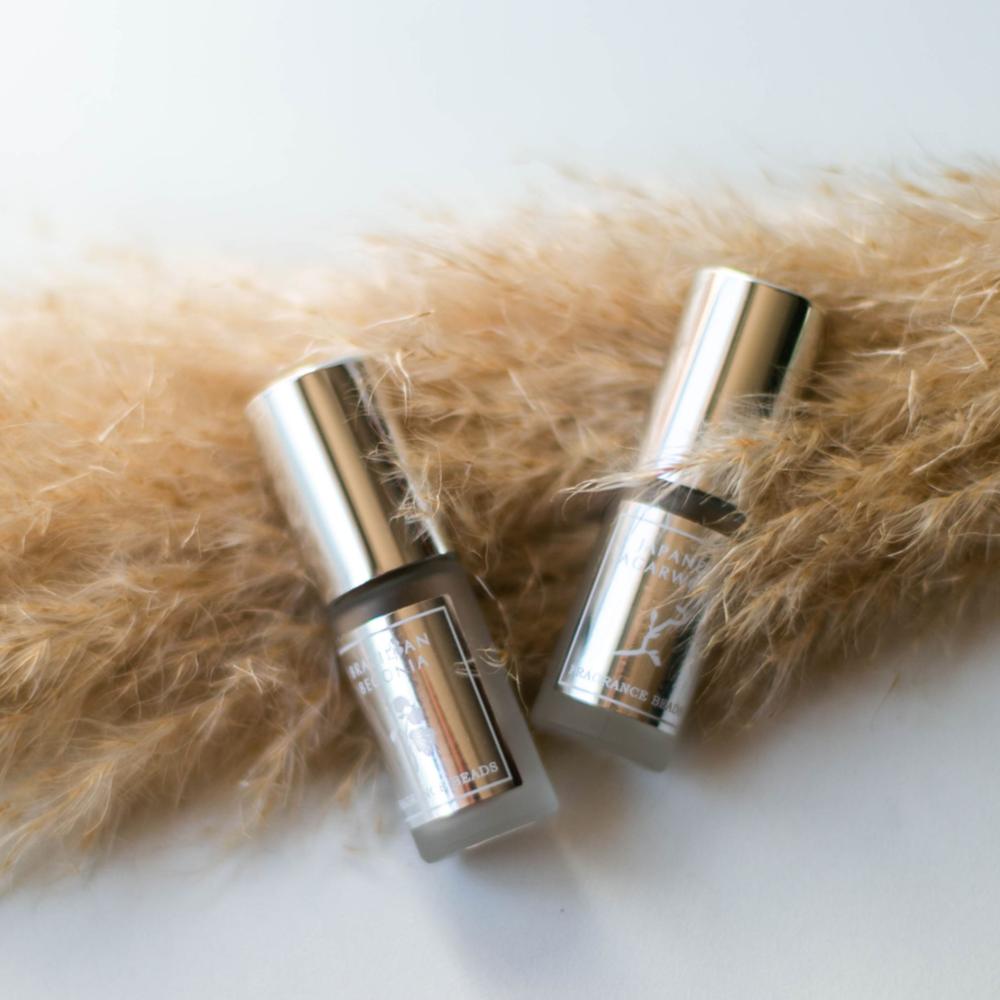
Agarwood:
From the Aquilaria tree, and also called Oud or Aloes wood. The tree, when attacked by a common fungus, produces an aromatic resin that has long been used in the Middle East as a source of incense and perfume. A high-quality piece of agarwood will sink in water. Today, Agarwood is an extremely rare and precious oil; the Co2 extract is a very viscous, very dark brown oil. The wild trees are very rare, having been severely over harvested, but the oil is now making a comeback due to the foresight of a few families in Assam who are planting large plantations of the tree.
Lisa Hoffman Beauty is dedicated to promoting environmental sustainability. The agarwood notes used in our perfume oils are derived from "ScentTrek" impressions.